

 Severe winter weather doesn’t just bring snow days and icy roads; it also brings one of the most common and expensive cold-weather problems: frozen pipes. Every year, frozen plumbing leads to burst pipes, water damage, mold growth, and costly repairs for homeowners and businesses.
Knowing what to do and what not to do can make all the difference. Below are smart, practical steps to protect your property, limit damage, and avoid long-term environmental and indoor air quality issues if your pipes freeze this winter.
Why Frozen Pipes Are Such a Big Deal
When water freezes, it expands. Inside a pipe, that expansion can create pressure that can cause the pipe to crack or burst, sometimes not immediately, but once the ice begins to thaw. The result can be sudden flooding, soaked building materials, and hidden moisture that lingers behind walls or under floors.
Left unaddressed, that moisture can lead to mold growth, structural damage, and poor indoor air quality—issues we frequently encounter during environmental assessments after winter weather events.
What to Do If Your Pipes Freeze
1. Turn on the Faucet
If you suspect a pipe is frozen, turn on the faucet connected to it—even if only a trickle comes out. Running water helps relieve pressure and provides melting ice with a place to go. This is a smart first step that can reduce the risk of a pipe bursting.
2. Apply Gentle Heat
Use a hair dryer, heating pad, or space heater to gradually warm the pipe, starting closest to the faucet and working your way back. Gentle, consistent heat is safer and more effective than rushing the process.
3. Open Cabinet Doors
Pipes under sinks, especially those on exterior walls, benefit from warm indoor air. Opening cabinet doors allows heat to circulate and can help thaw frozen sections faster.
4. Know Where Your Main Shutoff Valve Is
If a pipe does burst, being able to shut off the water immediately can limit damage. If you don’t already know where your main shutoff valve is, learning it now is a smart move before an emergency happens.
5. Call a Professional if Needed
If you can’t locate the frozen section, or if the pipe won’t thaw, a licensed plumber should step in. This is especially important for commercial buildings or older properties with complex plumbing systems.
What Not to Do If Your Pipes Freeze
❌ Don’t Use Open Flames
Never use a blowtorch, propane heater, or open flame to thaw pipes. This creates a serious fire risk and can weaken or damage the pipe itself.
❌ Don’t Ignore Small Leaks
A slow drip after thawing might not seem urgent, but it often signals a crack or split in the pipe. Even minor leaks can lead to hidden moisture problems that later manifest as mold or material deterioration.
❌ Don’t Shut Off Heat to “Save Money”
Lowering the thermostat too much or shutting off the heat entirely during extreme cold raises the risk of frozen pipes, especially overnight or in unoccupied areas of a building.
❌ Don’t Assume the Damage Is Over Once Water Flows Again
Just because the pipe thaws doesn’t mean everything is fine. Water may have already escaped into wall cavities, insulation, or subflooring. A smart response includes checking for moisture beyond what’s visible.
Preventing Frozen Pipes in the Future
- Insulate exposed pipes in basements, crawl spaces, and utility rooms
- Seal air leaks near plumbing, especially around exterior walls
- Keep indoor temperatures consistent during cold snaps
- Let faucets drip during extreme cold, especially overnight
- Drain and shut off outdoor water lines before winter
These preventive steps are simple yet effective, significantly reducing the risk of emergency repairs and water damage.
Why Frozen Pipes Can Become an Environmental Issue
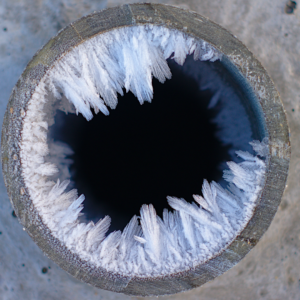 Water damage from frozen pipes can pose environmental and health risks. Damp building materials create ideal conditions for mold growth, which can affect indoor air quality and occupant health. In commercial spaces, this can disrupt operations and lead to costly remediation if left unchecked.
If your property experiences water damage after a freeze, a smart next step is to have a professional moisture test or environmental assessment to ensure hidden issues aren’t developing out of sight.
Final Thought
Frozen pipes are stressful, but with the right response, damage can often be minimized or avoided altogether. Taking smart action during severe winter weather protects not only your plumbing but the long-term health of your building.
If you suspect water damage, moisture intrusion, or indoor air quality concerns after a freeze, professional testing can provide clarity and peace of mind.
Stay warm, and stay prepared.